


Winter is tough on asphalt in Maryland. Between freezing temperatures, snow, plowing, and deicing materials, most parking lots and drive lanes come out of the season with new cracks or widened existing ones. Early spring is the time to take action.
At TruSeal Asphalt & Concrete, we treat crack sealing as one of the most important services in post-winter pavement care. If you wait too long, small surface cracks can quickly turn into potholes and structural problems. Here’s what property owners should know about crack sealing in early spring and why timing matters.
Why Pavement Cracks Get Worse Over Winter
Asphalt is flexible, but it still reacts to temperature changes. When water enters small cracks and freezes, it expands. That expansion forces the crack wider. When it thaws, water can penetrate deeper. This freeze-thaw cycle repeats all winter long.
By the time spring arrives, what started as a minor hairline crack may now be:
- Wider and deeper
- Connected to other cracks
- Allowing water to reach the base layer
Snowplows can also scrape the surface and loosen brittle edges. Deicing chemicals accelerate surface wear. Even normal traffic contributes to crack growth when the pavement is already stressed.
That is why early spring inspections are critical. Crack sealing done at the right time stops water intrusion before heavy spring rains make the problem worse.
What Is Crack Sealing?
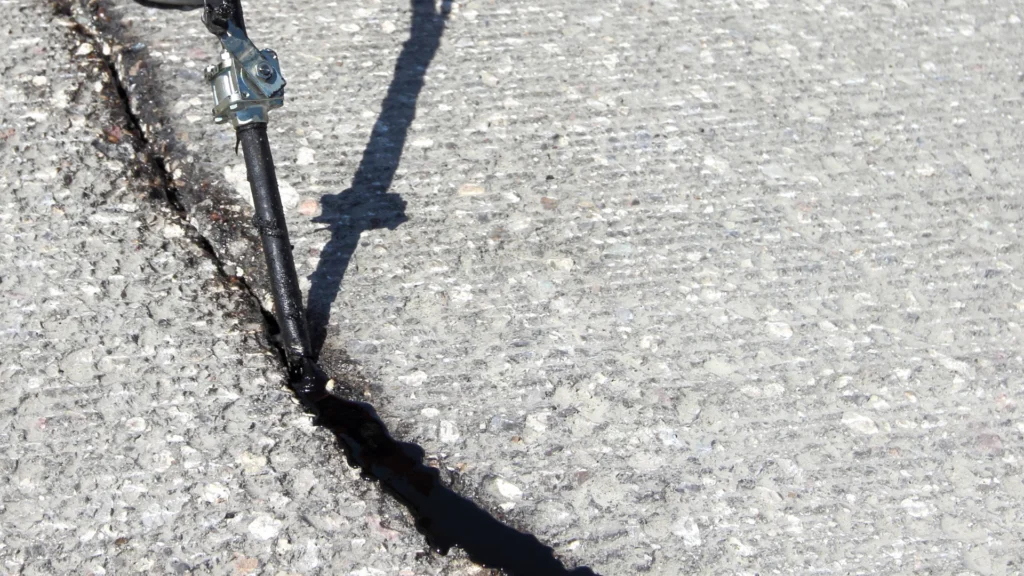
Crack sealing is the process of cleaning, preparing, and filling pavement cracks with a flexible rubberized sealant. The goal is simple: keep water and debris out of the pavement structure.
This is not the same as surface patching or resurfacing. Crack sealing targets individual cracks before they develop into larger failures.
When done properly, crack sealing:
- Blocks moisture penetration
- Slows crack expansion
- Reduces the chance of potholes
- Protects the base layer beneath the asphalt
It is one of the most cost-effective pavement maintenance services available.
Why Early Spring Is the Ideal Time for Crack Sealing
Many property owners wait until summer to address pavement issues. That can be a mistake.
Early spring offers several advantages for crack sealing:
1. Winter Damage Is Visible
Cracks that formed or widened during winter are easy to identify once snow is gone. This makes it the perfect time to assess what needs attention.
2. Temperatures Are Moderate
Crack sealing materials perform best when pavement temperatures are typically above 40 to 50 degrees Fahrenheit. Early spring in Maryland often provides workable days before summer heat arrives.
3. Preventing Spring Rain Damage
Spring brings frequent rain. If cracks are left open, water will saturate the base layer. That softens the support beneath the asphalt and leads to potholes. Sealing early blocks that moisture.
4. Preparing for Sealcoating Season
Crack sealing is often the first step before sealcoating. Addressing cracks in spring allows you to schedule additional maintenance as the season progresses.
How TruSeal Performs Crack Sealing
At TruSeal, we approach crack sealing as a detailed process, not just a quick fill.
Inspection and Evaluation
We begin by walking the site and identifying crack types. Not all cracks should be sealed the same way. Some are surface-level shrinkage cracks, while others may indicate deeper structural concerns.
If cracking is widespread or the base has failed, we may recommend patching before sealing.
Cleaning and Preparation
Proper preparation is critical. We use compressed air, wire brushes, or mechanical cleaning tools to remove dirt, debris, and vegetation from the crack.
Moisture must also be addressed. Sealant will not bond properly to wet surfaces.
Routing When Needed
For certain cracks, especially those wider than one-quarter inch, we may route the crack to create a uniform reservoir. This allows better sealant penetration and flexibility.
Applying Hot Rubberized Sealant
We use professional-grade hot rubberized crack sealing material. It is heated to the correct temperature and applied directly into the crack.
This type of sealant remains flexible as temperatures change. That flexibility allows it to move with the pavement rather than split open during expansion and contraction.
Final Inspection
Once applied, we review the work area and confirm that cracks are fully sealed and the surface is safe for traffic.
Types of Cracks That Benefit from Crack Sealing
Not every pavement issue is solved with crack sealing, but many are. Here are common crack types that respond well:
Longitudinal Cracks
These run parallel to the direction of traffic. They are often caused by pavement shrinkage or joint separation.
Transverse Cracks
These run perpendicular to traffic. Temperature shifts commonly cause them.
Block Cracking
This pattern forms large rectangular shapes. It usually results from asphalt aging and shrinkage.
Edge Cracks
These appear near the pavement edge and may be caused by poor drainage or shoulder movement.
Early crack sealing can stop all of these from turning into more serious failures.
What Happens If You Skip Crack Sealing?
It may be tempting to postpone maintenance, especially if cracks seem minor. But open cracks create a direct path for water.
When water reaches the base layer:
- The soil becomes unstable
- Load-bearing strength decreases
- Pavement begins to shift or sink
- Potholes form
Repairing potholes or replacing damaged sections costs far more than routine crack sealing.
For commercial properties, neglected cracks can also create trip hazards and liability concerns.
Crack Sealing vs. Filling: Is There a Difference?
Yes. The terms are sometimes used interchangeably, but they are not identical.
Crack sealing typically uses hot rubberized material designed for active cracks that expand and contract. It is applied in a way that allows movement.
Crack filling may involve different materials and is often used for non-working cracks where movement is minimal.
At TruSeal, we evaluate which method is appropriate based on the condition of the pavement.
Crack Sealing as Part of a Larger Maintenance Plan
Crack sealing works best as part of a broader pavement maintenance strategy. For many properties, that includes:
- Annual inspections
- Crack sealing every few years
- Sealcoating on a regular cycle
- Patching isolated failures
When combined, these services extend the functional life of your pavement and reduce long-term costs.
Spring is the time to map out that plan for the year.
Early Spring Is a Limited Window
Once temperatures rise and contractors’ schedules fill up, it becomes harder to secure timely service. Addressing crack sealing early in the season allows you to:
- Get ahead of heavy rains
- Lock in a schedule before peak demand
- Identify additional issues before summer traffic increases
Waiting until visible damage spreads often means higher repair bills.
Schedule Crack Sealing Before Problems Grow
If your pavement looks different this spring than it did last fall, you’re not alone. Winter exposes weak points. The key is addressing them early.
At TruSeal, we provide professional crack sealing services throughout Anne Arundel County and surrounding Maryland communities. We inspect, prepare, and seal pavement with the right materials and equipment for long-term performance.
Early action makes a measurable difference. Contact TruSeal today to schedule an inspection and address post-winter pavement damage before it spreads.
Frequently Asked Questions About Crack Sealing
How often should crack sealing be done?
Most commercial lots benefit from crack sealing every two to three years, depending on traffic and weather exposure.
Can crack sealing be done immediately after winter?
Yes, as long as pavement temperatures are above the recommended range and the surface is dry.
Is crack sealing enough to fix potholes?
No. Potholes require patching. Crack sealing is meant to prevent potholes from forming.
How long does crack sealing take to cure?
Hot rubberized sealant typically cools and sets within an hour under normal conditions, allowing traffic to resume the same day.
Will crack sealing stop all cracking?
It will not stop natural aging, but it significantly reduces water infiltration and slows further damage.

Ian Chaput is the founder of TruSeal Asphalt & Concrete and brings hands-on experience in asphalt sealcoating, pavement maintenance, and surface protection. With a background in business and marketing, Ian leads TruSeal with a focus on professional execution, clear communication, and long-term pavement performance for residential and commercial properties across Central Maryland.