


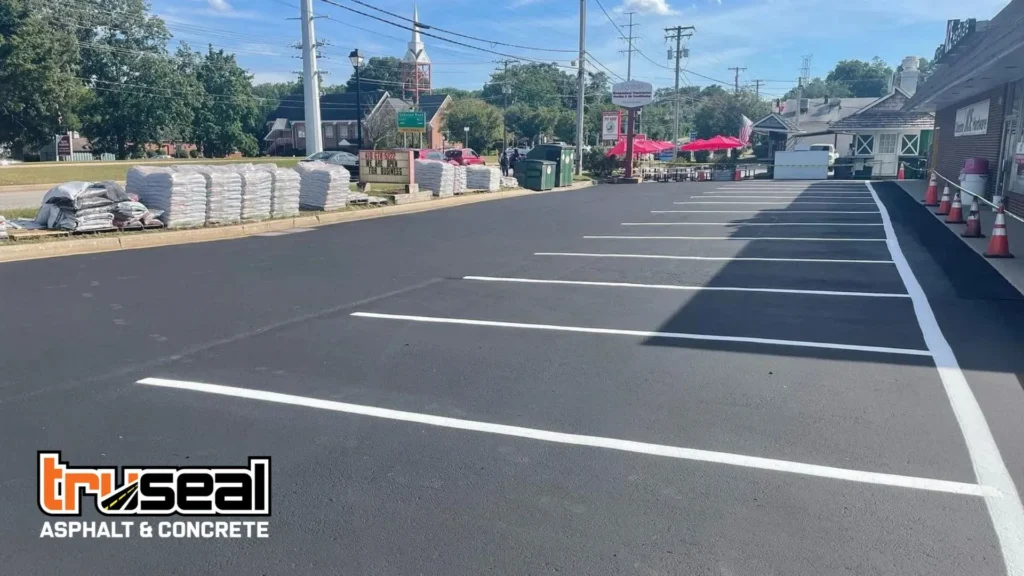
As winter approaches, commercial property managers have several maintenance responsibilities to address before temperatures drop. While snow removal planning, pavement repairs, and drainage maintenance are often top priorities, parking lot line striping is another important part of preparing a property for winter.
Over time, parking lot markings fade from vehicle traffic, sunlight, rain, and routine wear. As these markings become harder to see, drivers may struggle to identify parking spaces, traffic lanes, pedestrian crossings, and designated loading areas.
Winter conditions can make these problems worse. Shorter daylight hours, wet pavement, snow, and ice can further reduce visibility throughout a parking lot.
Scheduling line striping before winter helps commercial property managers improve traffic organization, maintain clear parking areas, and address potential safety concerns before harsh weather arrives.
Why Parking Lot Line Striping Matters During Winter
Parking lots experience different challenges throughout the winter months. Reduced daylight, freezing precipitation, and changing pavement conditions can make it more difficult for drivers and pedestrians to move safely through commercial properties.
Clearly marked parking lots help establish predictable traffic patterns, particularly in busy areas where vehicles and pedestrians frequently cross paths.
Fresh line striping helps define:
- Parking spaces and accessible parking areas
- Directional arrows and vehicle travel lanes
- Pedestrian crosswalks and walking routes
- Fire lanes and emergency access areas
- Loading zones and designated no-parking areas
These markings provide important visual guidance for employees, customers, tenants, and delivery drivers.
Although line striping cannot eliminate winter hazards, maintaining visible pavement markings is a practical way to support safer parking lot operations.
How Line Striping Helps Reduce Parking Lot Safety Risks
Improving Visibility During Shorter Winter Days
During winter, many commercial properties experience significant vehicle and pedestrian activity before sunrise or after sunset.
Faded parking lot markings can be especially difficult to identify under artificial lighting or during periods of rain and snow.
Fresh line striping improves the contrast between pavement surfaces and designated traffic areas, making parking spaces, travel lanes, and pedestrian crossings easier to recognize when the pavement is visible.
For commercial properties with evening operating hours, maintaining these markings can be particularly valuable.
Creating More Organized Traffic Flow
Poorly defined traffic lanes can lead to confusion, particularly in parking lots with multiple entrances, exits, and high vehicle volumes.
Drivers may travel against intended traffic patterns, park outside designated spaces, or block access routes when markings are no longer clear.
Line striping establishes visible boundaries that help drivers understand where to travel, turn, and park.
For shopping centers, office buildings, industrial facilities, and other commercial properties, organized traffic flow can help reduce unnecessary congestion and conflicts between vehicles.
Helping Protect Pedestrians
Pedestrian safety is another important consideration for commercial property managers preparing for winter.
Employees and visitors often walk between parking areas, building entrances, sidewalks, and loading zones. Without clearly identified crossings, pedestrians may be forced to move through areas where drivers are not expecting foot traffic.
Parking lot line striping helps distinguish pedestrian walkways and crosswalks from vehicle travel lanes.
While painted markings do not replace proper lighting, signage, or snow removal, they provide another layer of visual guidance for people using the property.
Why Fall Is a Good Time to Schedule Line Striping
Fall provides an opportunity to inspect parking lot markings and complete necessary maintenance before winter weather limits available working conditions.
Most pavement marking products require specific surface temperatures, dry pavement, and suitable weather conditions for proper application and curing.
As temperatures decline and precipitation becomes more frequent, scheduling line striping can become more challenging.
Completing the work during suitable fall conditions may also help property managers avoid delaying necessary improvements until spring.
A pre-winter parking lot inspection should identify faded markings, changes in traffic patterns, and areas where existing striping no longer meets the property’s needs.
What Commercial Property Managers Should Evaluate Before Winter
Before scheduling line striping, property managers should review how their parking lot is currently used and whether the existing layout supports safe vehicle and pedestrian movement.
Important considerations include:
- Marking condition: Identify faded, peeling, or difficult-to-see pavement markings.
- Accessible parking: Review accessible spaces, access aisles, and related signage for applicable compliance requirements.
- Emergency access: Confirm that fire lanes and other restricted areas are properly identified.
- Traffic patterns: Evaluate directional arrows, intersections, and areas where vehicles frequently cross.
- Pavement condition: Address significant cracks, potholes, or surface damage that could affect marking application.
Line striping should also be coordinated with any planned asphalt repairs or sealcoating. Completing necessary pavement maintenance first can help avoid having to repaint newly marked areas.
Frequently Asked Questions
How often should a commercial parking lot be restriped?
Many commercial parking lots benefit from restriping every one to two years, although the appropriate schedule depends on traffic volume, pavement condition, weather exposure, and the type of marking material used. High-traffic properties may require more frequent maintenance.
Can parking lot line striping be completed during cold weather?
Line striping may be possible during colder months, depending on the pavement marking material, surface temperature, and weather conditions. Many products require dry pavement and minimum application temperatures. Scheduling work before winter generally provides more favorable conditions.
Should asphalt repairs and sealcoating be completed before line striping?
Yes. When repairs or sealcoating are planned, these services should generally be completed before applying new pavement markings. The pavement must be properly prepared, and any sealcoat must have sufficient time to cure before striping begins.
Prepare Your Commercial Parking Lot for Winter With TruSeal
Faded pavement markings can create unnecessary confusion for drivers and pedestrians, especially as winter conditions reduce visibility.
TruSeal helps commercial property managers maintain organized parking areas through professional line striping and asphalt maintenance services.
Get your parking lot ready for winter. Contact TruSeal today to discuss your property’s line striping needs.

Ian Chaput is the founder of TruSeal Asphalt & Concrete and brings hands-on experience in asphalt sealcoating, pavement maintenance, and surface protection. With a background in business and marketing, Ian leads TruSeal with a focus on professional execution, clear communication, and long-term pavement performance for residential and commercial properties across Central Maryland.