


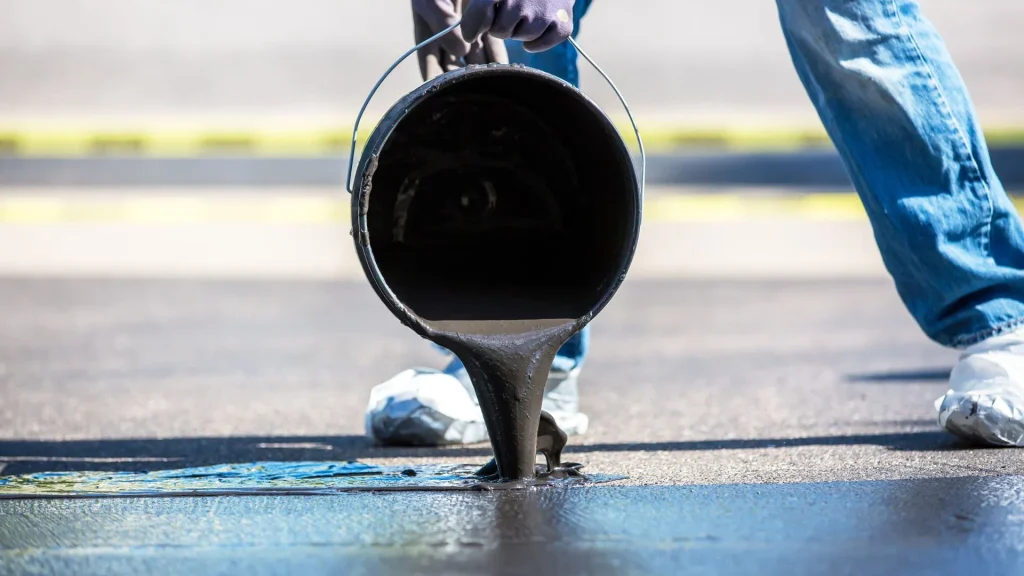
Winter can be hard on a commercial parking lot. Falling temperatures, moisture, snow, ice, and freeze-thaw cycles can expose existing pavement problems and contribute to further deterioration. For property managers, the weeks leading into winter provide an opportunity to address maintenance before cold weather limits what can be completed.
Sealcoating asphalt in the fall can be a practical part of that maintenance plan, but timing matters. Sealcoat needs suitable temperatures and dry conditions to cure correctly. Waiting too long into the season can mean missing the appropriate application window altogether.
For commercial properties in Maryland, planning early can help property managers determine whether their pavement is a good candidate for sealcoating before winter arrives.
Why Sealcoating Asphalt Before Winter Can Be Beneficial
Asphalt pavement is exposed to UV rays, vehicle traffic, oil, water, and changing temperatures throughout the year. Over time, the surface can oxidize, lose its dark color, and become more vulnerable to wear.
Sealcoating asphalt adds a protective coating over the pavement surface. It can help limit exposure to moisture and other elements while giving faded pavement a cleaner, darker appearance.
That protective surface can be especially useful heading into winter. Water that reaches cracks or damaged areas can freeze as temperatures fall. When water freezes, it expands. Repeated freeze-thaw cycles can contribute to pavement deterioration, especially where cracks and other defects are already present.
Sealcoating is not a repair for damaged pavement, but it can play an important role in a broader preventive maintenance program.
Fall Weather Creates a Limited Sealcoating Window
Property managers should not treat the entire fall season as one long opportunity for sealcoating asphalt. Application conditions matter.
TruSeal recommends sealcoating when the pavement is clean and dry and nighttime temperatures are forecast to remain above 50°F. The material also needs enough time to cure before the surface is reopened to traffic.
This makes early fall scheduling valuable. A warm, dry stretch in September or early October may provide suitable conditions, while later fall weather can become less predictable.
Rain also affects scheduling. Applying sealer immediately before rainfall can interfere with curing and the finished surface. Contractors need to account for the forecast before beginning work.
For a commercial property manager, this means the best time to start planning is before temperatures begin consistently dropping, rather than waiting until winter is a few weeks away.
Sealcoating Should Come After Necessary Pavement Repairs
One of the biggest mistakes a property manager can make is viewing sealcoating as a solution for every asphalt problem.
Sealcoating asphalt protects the pavement surface. It does not correct potholes, failed pavement, drainage problems, or structural damage.
Before applying sealer, the parking lot should be inspected for conditions such as:
- Open or widening cracks
- Potholes and failed pavement areas
- Standing water or drainage concerns
- Crumbling or deteriorated pavement edges
- Oil spots and surface contamination
- Areas showing significant surface wear
Crack sealing and necessary asphalt repairs should generally be addressed before sealcoating. TruSeal’s process begins with a site evaluation to identify pavement conditions and determine which work should be completed first.
This order matters because putting sealer over pavement that already needs significant repair does not correct the underlying issue.
Fall Maintenance Can Help Prepare a Parking Lot for Winter Operations
Property managers have more to consider than pavement condition alone. Commercial lots also need to remain functional for tenants, customers, employees, delivery vehicles, and winter maintenance crews.
Completing sealcoating asphalt before winter can give managers an opportunity to evaluate the entire parking lot before snow and ice arrive.
For example, sealcoating is often followed by fresh line striping. This can restore parking stalls, accessible spaces, fire lanes, directional markings, and other pavement markings that have faded over time.
It is also a useful point in the year to identify drainage concerns. Areas that hold water during fall rain may become problem spots once freezing temperatures arrive. Identifying these locations early gives property managers better information for planning repairs and future capital improvements.
Plan Around Tenants and Parking Lot Traffic
Commercial sealcoating requires temporary parking restrictions while work is being completed and while the material cures. On a busy property, that requires coordination.
Retail centers may need work divided into sections so customers can continue accessing businesses. Office properties may benefit from weekend scheduling. Multifamily communities may require advance notice so residents know where to park.
TruSeal works with commercial real estate firms, property managers, facility directors, businesses, HOAs, schools, institutions, and other organizations throughout Central Maryland.
For larger lots, phased scheduling can reduce disruption while allowing the work to move across the property in manageable sections.
Don’t Wait Until the First Freeze to Review Your Pavement
Sealcoating asphalt is highly dependent on weather, which makes fall planning especially important. Once nighttime temperatures become consistently too cold, the practical application window can close.
Reviewing pavement conditions earlier gives property managers time to identify repairs, coordinate schedules with tenants, watch the weather, and complete appropriate maintenance before winter.
A well-timed fall project can also put the property in a better position heading into the months of snow, ice, freezing temperatures, and winter maintenance activity.
Frequently Asked Questions
How late in the fall can a commercial parking lot be sealcoated?
There is no single cutoff date because weather conditions vary. TruSeal recommends a clean, dry surface with nighttime temperatures forecast above 50°F, so property managers should plan before consistently colder weather arrives.
Should cracks be repaired before sealcoating?
Yes. Crack sealing and necessary structural repairs should generally be completed first because sealcoat is a surface treatment and does not repair underlying pavement failures.
Can a commercial parking lot stay open during sealcoating?
Parts of the property may remain accessible if the project can be completed in phases. The exact plan depends on the parking lot layout, traffic needs, weather, and the amount of curing time required.
Schedule a Fall Pavement Assessment With TruSeal
If your commercial parking lot is faded, showing signs of wear, or due for seasonal maintenance, fall is a good time to determine what should be addressed before winter. TruSeal Asphalt & Concrete provides commercial sealcoating, asphalt repair, line striping, paving, and other pavement services throughout Central Maryland.
Contact TruSeal Asphalt & Concrete to schedule an on-site assessment and determine whether sealcoating asphalt makes sense for your property this fall.

Ian Chaput is the founder of TruSeal Asphalt & Concrete and brings hands-on experience in asphalt sealcoating, pavement maintenance, and surface protection. With a background in business and marketing, Ian leads TruSeal with a focus on professional execution, clear communication, and long-term pavement performance for residential and commercial properties across Central Maryland.